Why Your Marketing Isn't Working — And How To Fix It
You're posting consistently. You've tried the ads. You've followed the advice. And you're still not seeing the results you were promised.
I'm going to tell you exactly why — and it has nothing to do with your budget, your platform, or your content calendar.
Somewhere along the way, marketing turned into a game of chasing the next trend, testing the next tool, and hiring the next "expert" who promises to fix it all. You followed a guru framework. You Googled your way through SEO guides and social media hacks. You probably got burnt out trying to keep up, so you handed it off to AI just to stay consistent. Maybe you even ran paid ads that went nowhere.
Sound familiar? You're not alone — and you're not the problem.
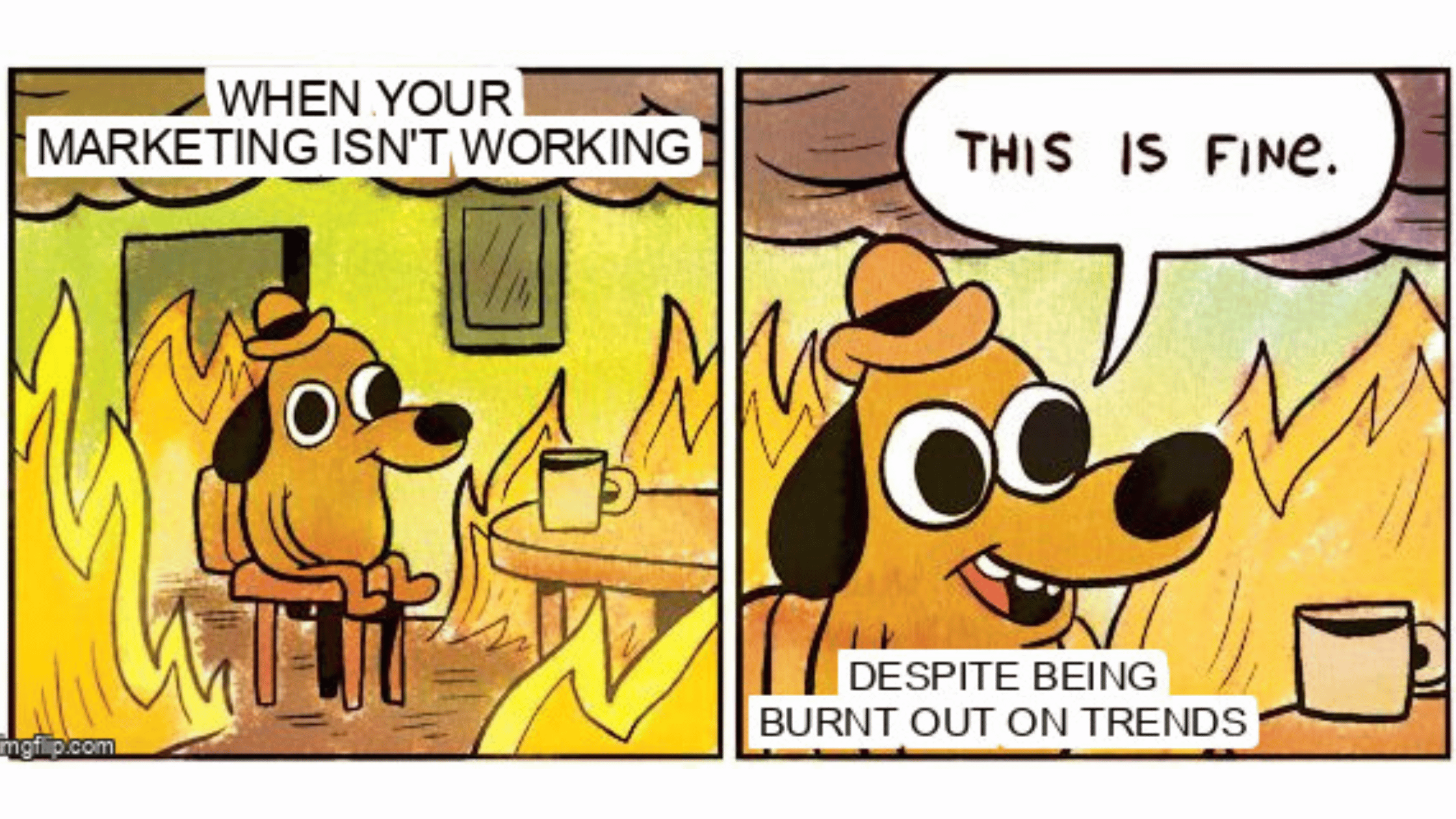
When your marketing isn’t working despite being burnt out on trends
Word of Mouth Still Works. It Just Lives Online Now.
You've probably thought about scrapping all of it and going back to word of mouth — the way business used to work. And honestly? Word of mouth still works. It's just moved online.
People don't call a friend anymore to ask for a plumber recommendation. They post in a Facebook group. They search reviews. They ask their followers. Word of mouth is very much alive — it's just digital now, and it requires a different kind of intentionality.
But here's where it gets complicated: nothing feels real online anymore. AI-generated content is everywhere, and it's diluted authentic connection to the point where people are genuinely skeptical of everything they read. That's exactly why word of mouth still carries so much weight — it's real, it's trusted, and it cuts through the noise.
The problem isn't social media. The problem is that we've lost the art of communicating like humans.
Storytelling Is the Original Marketing Strategy
Storytelling has been the most powerful form of human communication since the beginning — from oral traditions passed around fires, to the parables that shaped entire belief systems, to the handwritten letters that built relationships across distance.
Somewhere along the line, we replaced storytelling with telegrams. Punchy, transactional, unemotional blasts. And that's what most marketing looks like today — just louder and faster, because now it's online.
Want to know what actually cuts through? Going back to what's always worked: genuine human connection, rooted in understanding who you're talking to and why it matters to them.
The Real Fix: Build Your Foundation First
Here's what most marketing advice skips entirely — the foundation. The tactics, tools, and trends aren't the problem. They're overwhelming and confusing because you don't know how to use them yet. And you don't know how to use them because you haven't fully defined what your brand stands for, who you actually serve, and how to speak directly to them.
Fix the foundation, and the tactics start to make sense. Here's what that looks like:
Define Your Brand — For Real This Time
Defining your brand goes way deeper than your logo, your color palette, or your tagline. It means getting honest about your values, your mission, and the kind of business you're actually trying to build. It means figuring out what you stand for — and what you won't compromise on.
When you do that work, something shifts. Your voice gets clearer. Your messaging gets sharper. You stop second-guessing every caption and start making decisions with confidence. Your brand becomes something people can feel — and that's what makes it memorable. According to research published by Emporia State University, emotional connection is one of the primary drivers of brand loyalty — more than price, and more than convenience.
A well-defined brand is also your single most valuable asset when it comes time to hire or outsource. Instead of hoping a new marketer "gets" you, you hand them the playbook and they hit the ground running. No wheel reinvention. No off-brand content. No starting over.
Understand Your Ideal Client — Beyond the Surface
Your ideal client isn't just someone who needs what you offer. They're a real person making decisions based on emotions first, logic second — and that changes everything about how you communicate with them.
Understanding your ideal client means digging into their psychographics — not just their age or income, but what keeps them up at night, what they're embarrassed to admit, what they're actively searching for, and what finally pushes them to take action. Nobel Prize-winning behavioral economist Daniel Kahneman's research on System 1 and System 2 thinking showed that most decisions are made fast and emotionally before the rational brain ever gets involved. That means your marketing needs to connect with how your audience feels — not just what they need functionally.
When you truly understand your ideal client, you stop trying to market to everyone and start speaking directly to the people who are already looking for exactly what you do.
Curate Your Messaging — Then Watch It Work
This is where everything comes together. And no — you don't need to be a natural-born writer. You just need to stop thinking about the transaction and start thinking about how to genuinely help someone.
Here's what the difference looks like in practice:
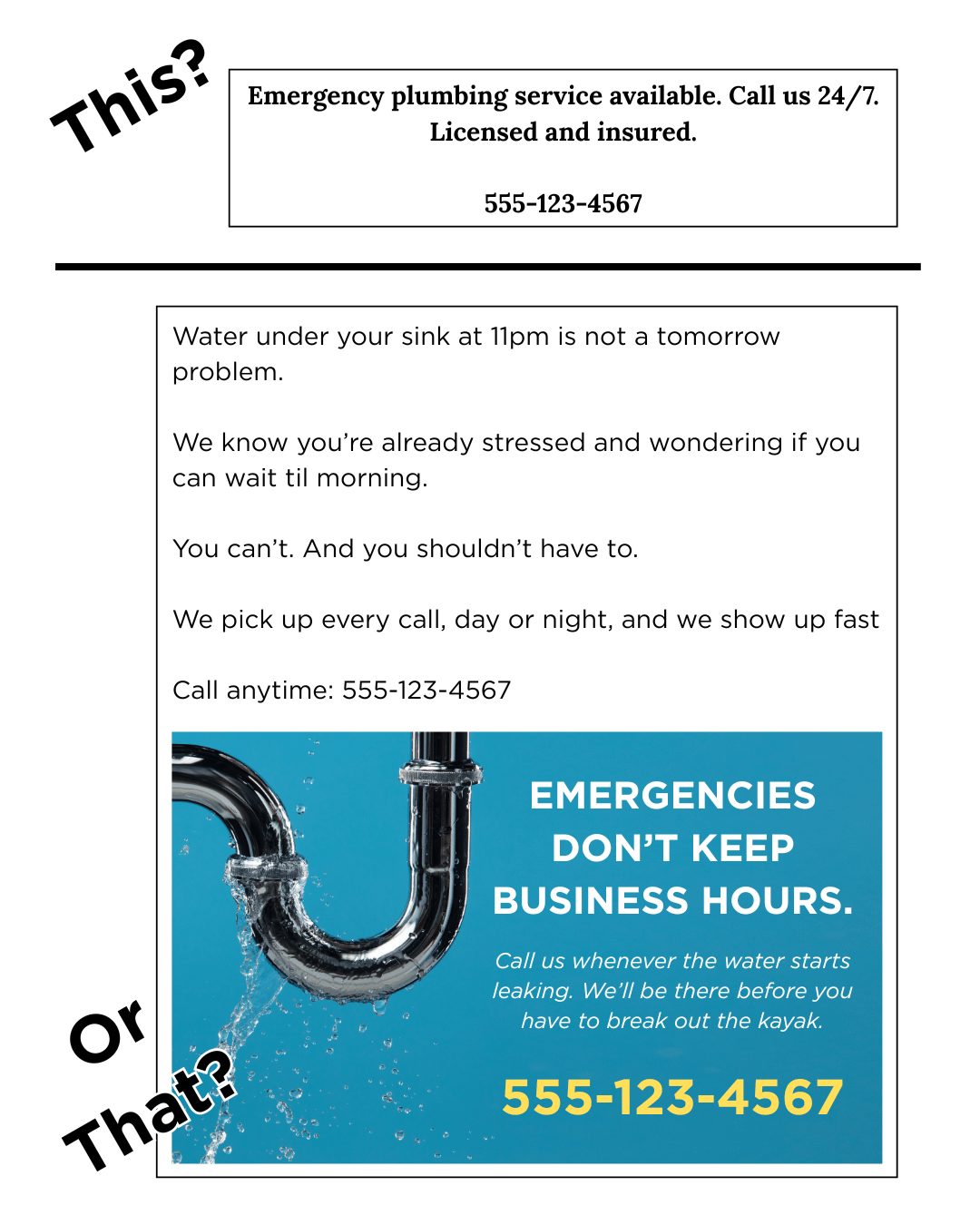
Surface-level ad: "Emergency plumbing service available. Call us 24/7. Licensed and insured."
This version is technically accurate. Licensed, insured, 24/7 — all the right boxes checked. But it doesn’t make anyone feel anything. It reads like a yellow pages listing, not a business that gets what you’re going through at 11pm with water spreading across your kitchen floor.
Connection-first messaging: "Water under your sink at 11pm is not a tomorrow problem. We know you’re already stressed, already calculating the damage in your head, already wondering if you can make it to morning. You can’t. And you shouldn’t have to. We pick up every call, day or night, and we show up fast — because a flooded kitchen doesn’t wait for business hours. Neither do we."
Same service. Same availability. One version describes the business. The other describes the customer’s experience — and that’s the one that gets the call.
This isn't just good copywriting. It's applied behavioral psychology. Dr. BJ Fogg's Behavior Model at Stanford shows that behavior change — including purchasing decisions — requires the right motivation, at the right moment, with the right trigger. When your messaging is rooted in what your audience is actually experiencing, you hit all three.
Marketing Tactics Are Only Confusing When the Foundation is Missing
Every new platform, every algorithm update, every new AI tool — they're only overwhelming because there's no filter system in place. When you know exactly who you are, who you serve, and how you show up, you can evaluate any new tactic in about 30 seconds. Does it fit? Use it. Doesn't fit? Move on. No more chasing shiny objects out of fear that you're missing something.
Your marketing will never be sustainable if it's built on tactics alone. Tactics change. Platforms change. Algorithms change. But a strong brand foundation? That's yours. Nobody can take it, copy it, or outspend it.